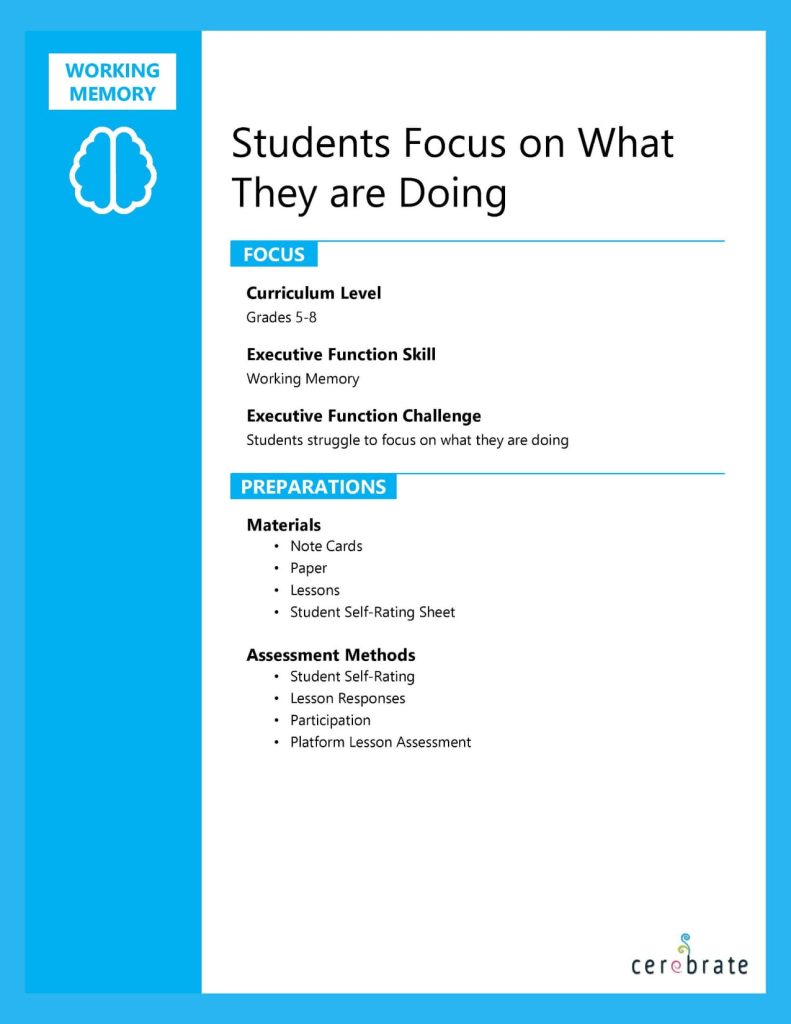
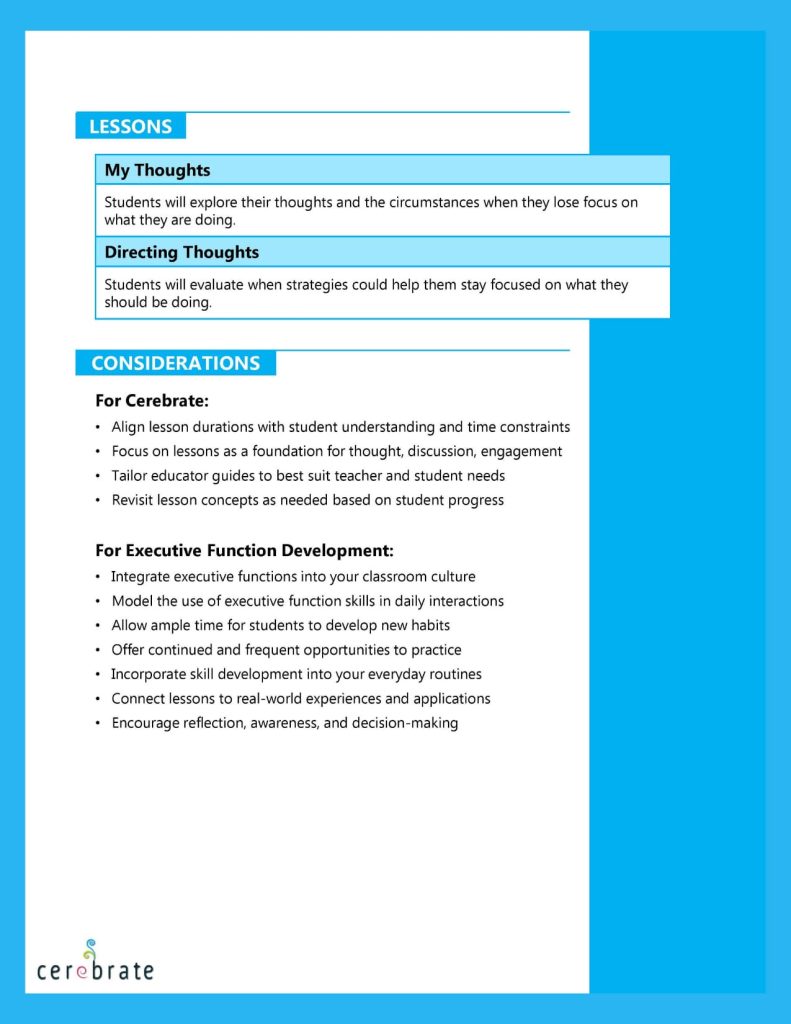
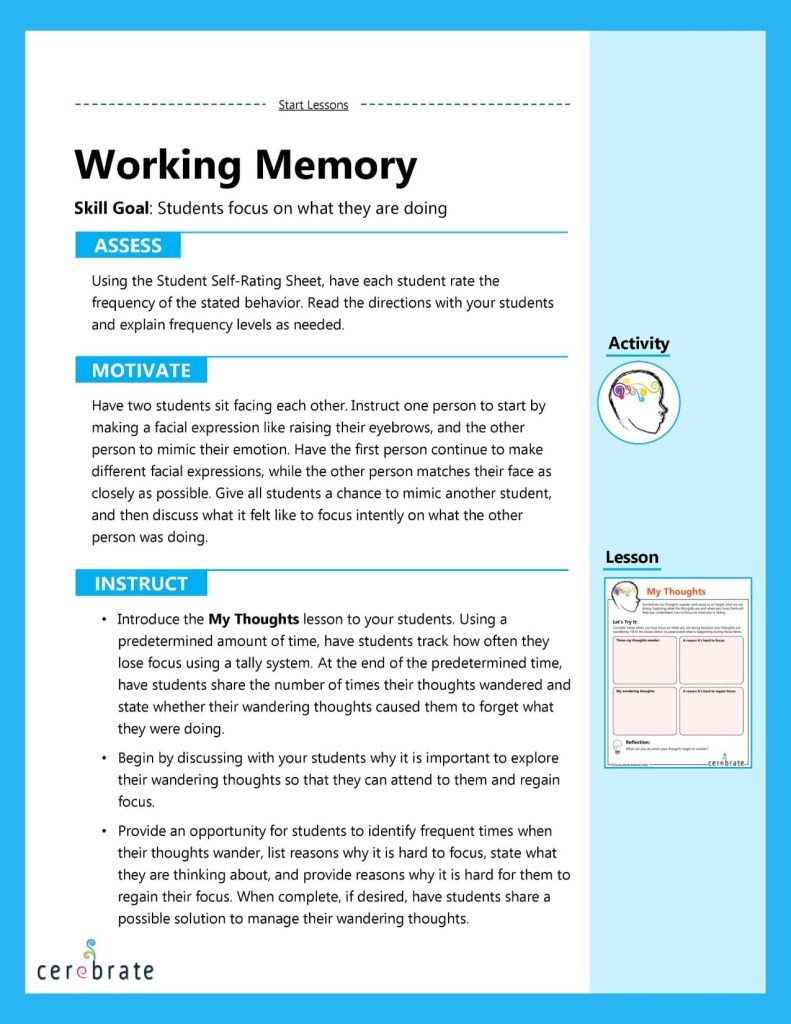
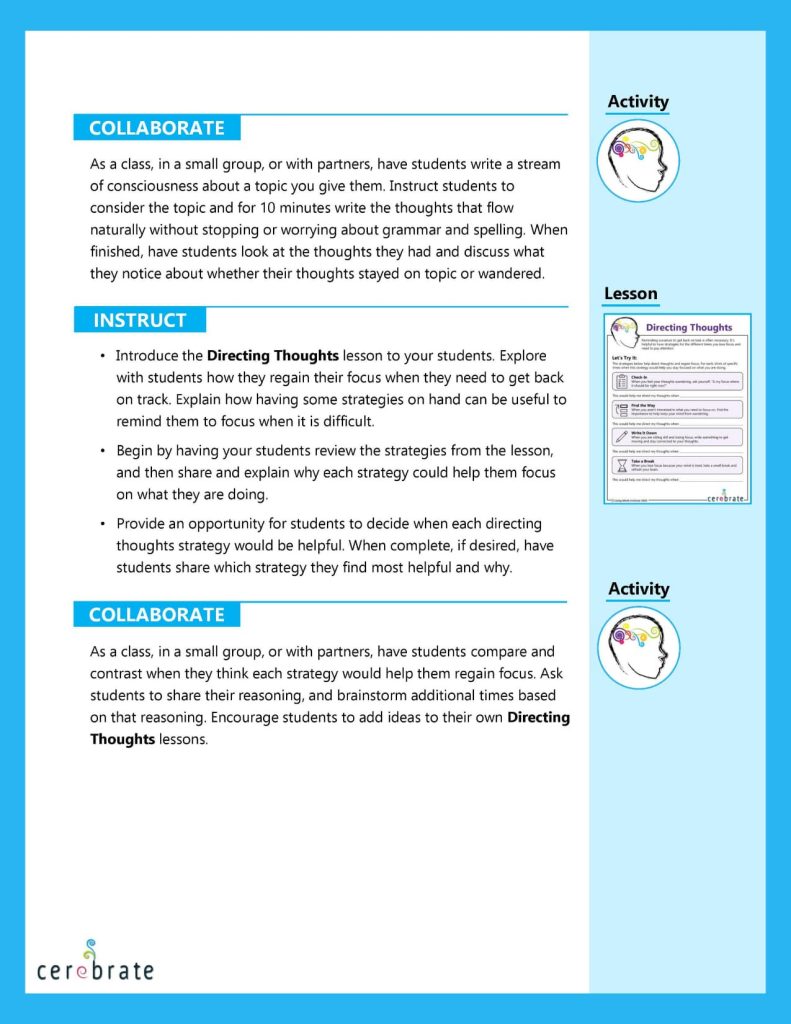
Executive Function Curriculum for Skill Development.
Deliver targeted executive function lessons that build skills students need to learn and succeed.
Executive Function Curriculum That Builds Student Skills
- Deliver K–12, age-appropriate executive function lessons aligned to student needs
- Support educators with clear guides, objectives, and practical implementation strategies
- Build organization, self-regulation, time management, and problem-solving skills
Executive Function Instruction Through Engaging Lessons
Cerebrate’s executive function lessons help students build self-awareness, increase engagement, develop critical thinking, strengthen pro
blem-solving skills, and reflect on their learning. Through intentional executive function instruction, students gain practical strategies to manage learning tasks, regulate behavior, and apply skills across academic and classroom settings.
The curriculum is engaging, easy to use, and organized across three developmental levels to ensure age-appropriate instruction:
- Grades 1–4
- Grades 5–8
- Grades 9–12
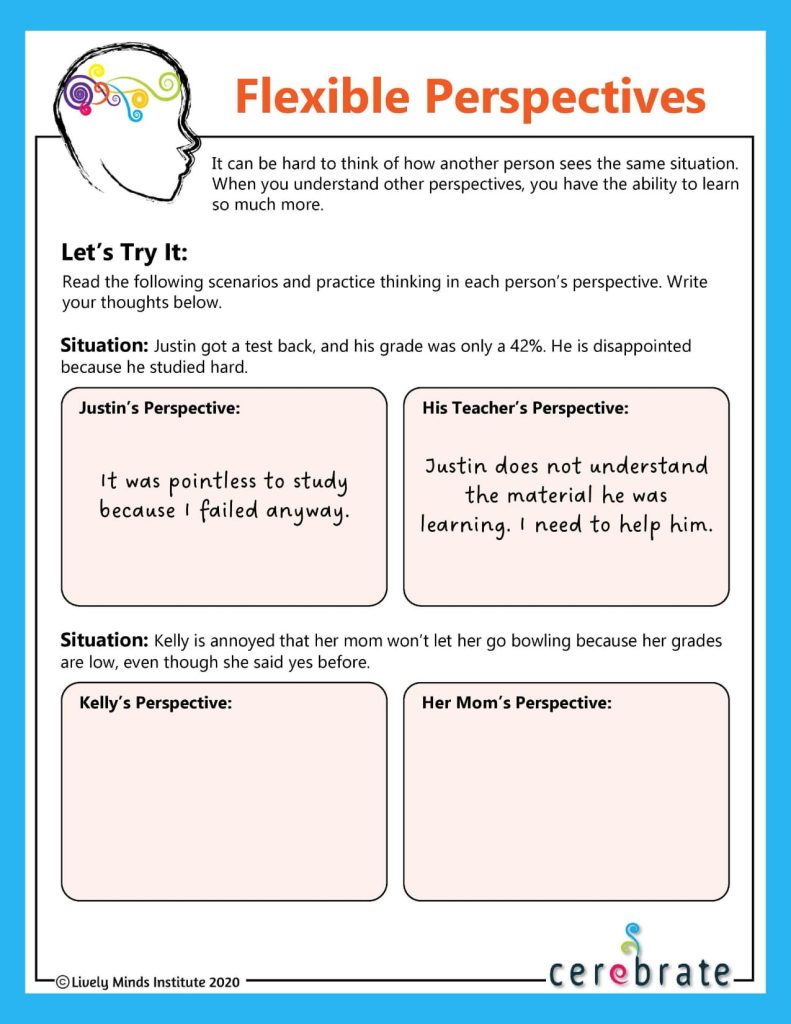
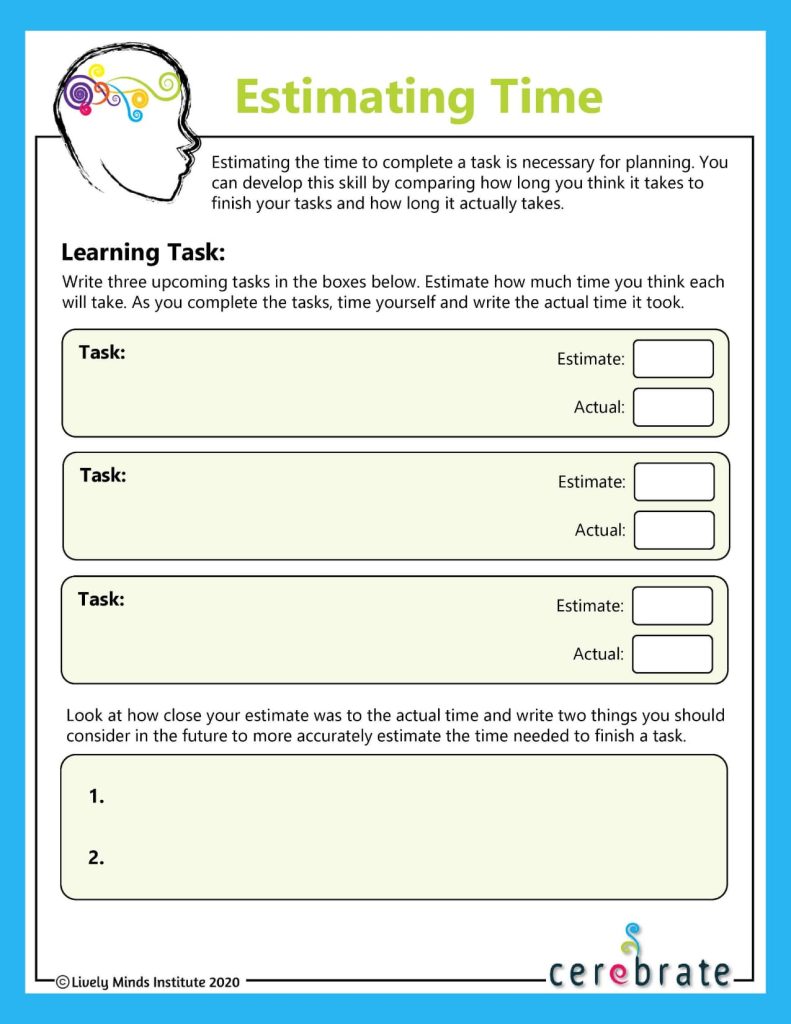
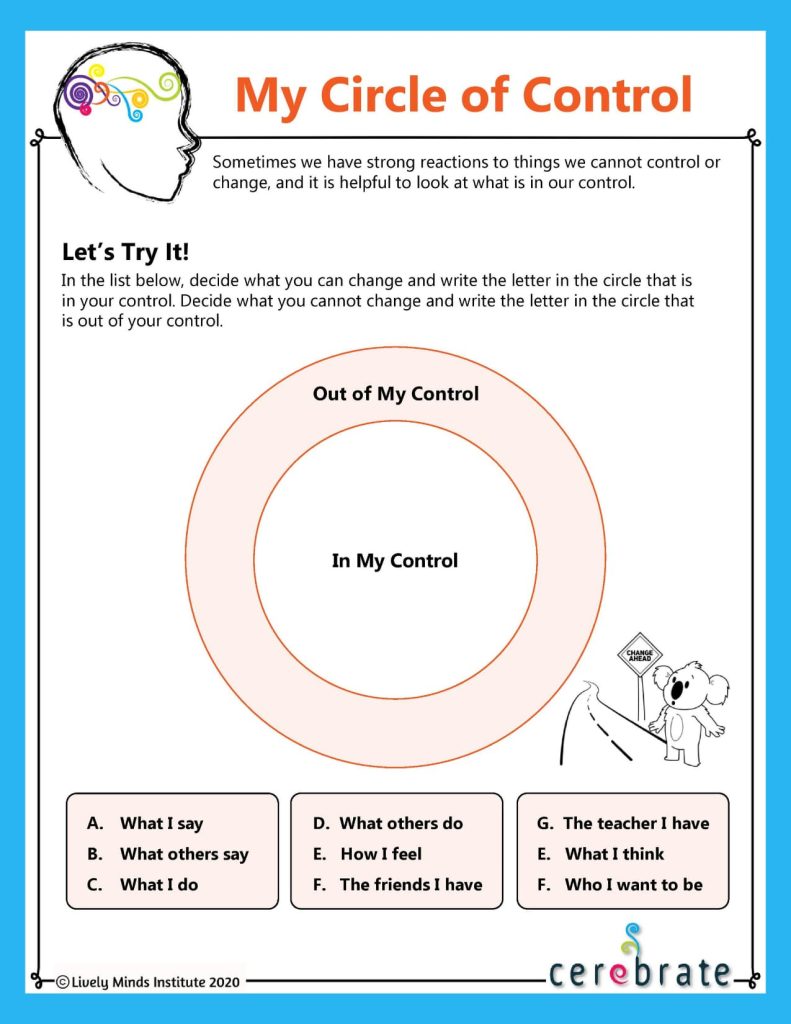
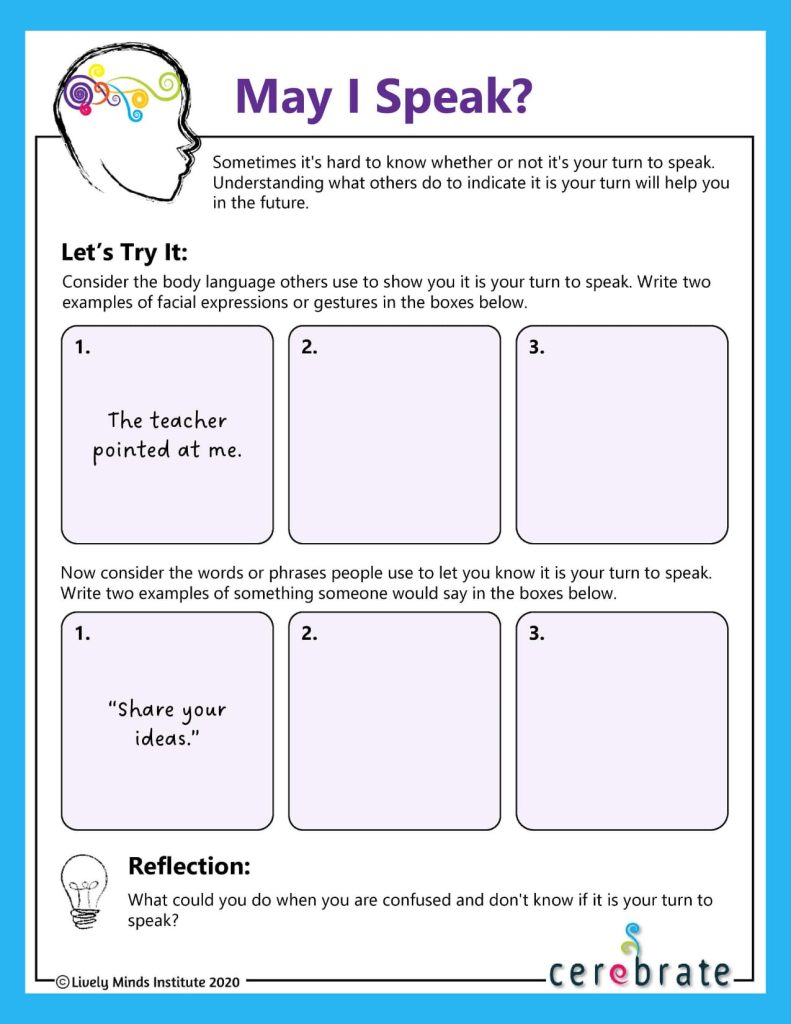
Each level includes hundreds of lessons addressing 64 unique executive function challenges, allowing educators to customize instruction for individual students, small groups, or entire classes. By targeting the challenges that most impact learning, teachers can deliver focused instruction that removes barriers and supports meaningful learning success.
Executive Function Educator Guides That Support Instruction
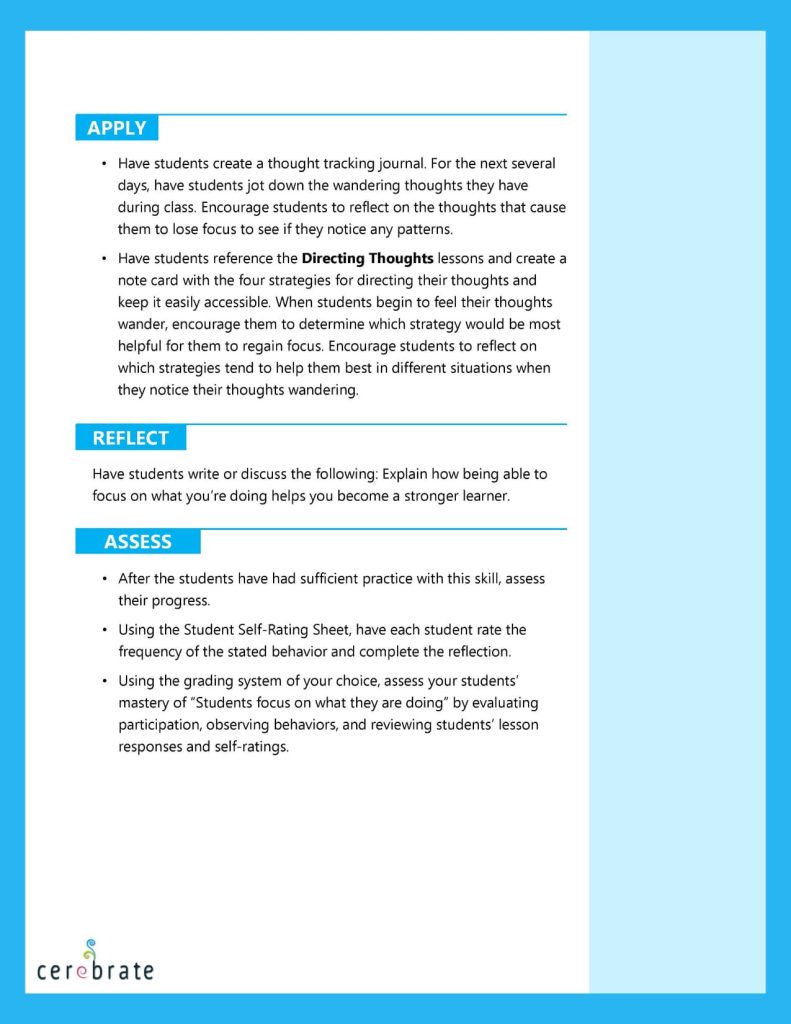
Each executive function challenge includes a dedicated Educator Guide designed to support clear, confident instruction. Guides provide the structure educators need while allowing flexibility to meet student needs.
Educator Guides support teachers by providing:
- Clear learning objectives and instructional steps
- Practical executive function strategies for consistent implementation
- Activities to increase student motivation and engagement
- Opportunities for collaboration in whole-class, small-group, or partner settings
- Reflection prompts and practical applications to help students transfer skills
While Educator Guides offer guidance and direction, they are flexible by design—allowing educators to adapt executive function instruction for individual students, small groups, or entire classes.
What Administrators and Educators Are Saying About Cerebrate
The lesson plans are easy to follow, and it’s doable even for someone not certified in that area.
School Principal
The strategies and self-reflection exercises provided in the Cerebrate curriculum give my students the tools and inner strength they need to navigate through many of the challenges they encounter within their educational process.
Classroom Teacher
There’s enough ‘meat’ in Cerebrate to make it daily versus once a week.
School Principal
Cerebrate offers a variety of worksheets to go along with the lessons. The students are able to utilize hands-on activities to encourage group participation.
Classroom Teacher
I would say that Cerebrate has really been a beautiful place for us to turn when we needed something explicit, manageable, and direct.
School Principal
The bite-sized nature of Cerebrate’s lessons is huge—meaningful impact in small, manageable doses.
School Principal
The teachers appreciate the practicality of the lessons, finding them applicable to content area courses. They can revisit and reinforce lessons multiple times, making them more versatile.
Program Specialist
Cerebrate forces students to be reflective and gives them permission to find what works for them.
School Principal
The curriculum allows for personalization by letting instructors incorporate their own materials and teaching methods, enhancing the support for personalized instruction.
Instructional Coach
I have enjoyed spending time in the smaller groups with students. The educators’ guides and lessons are well scaffolded.
Classroom Teacher
The concise nature of lessons allows for easy integration as mini-lessons. Their open-ended nature allows for flexible usage based on observed student trends or patterns.
Program Specialist
Executive Function Proficiencies That Support Learning and Behavior
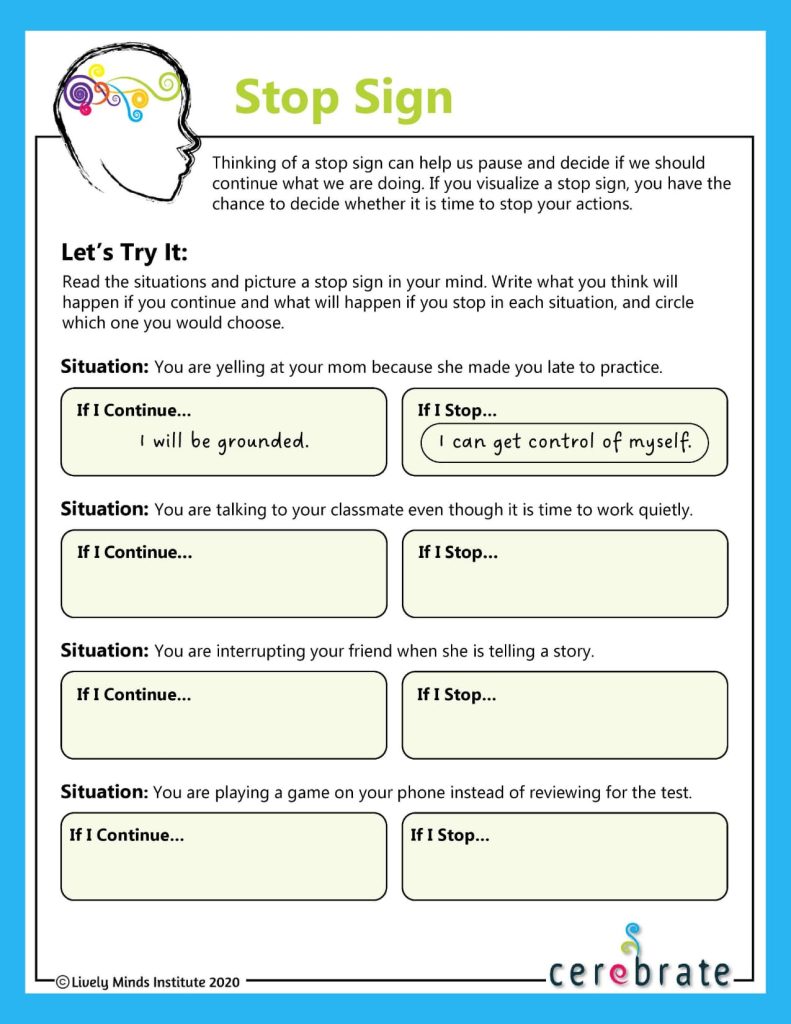
Cerebrate helps students build essential executive function proficiencies that support learning, behavior, and independence. Students develop self-control and self-monitoring skills such as pausing before acting, thinking before speaking, checking work for errors, and understanding how their actions affect others. As awareness grows, students become more intentional in how they engage with tasks, peers, and classroom expectations.
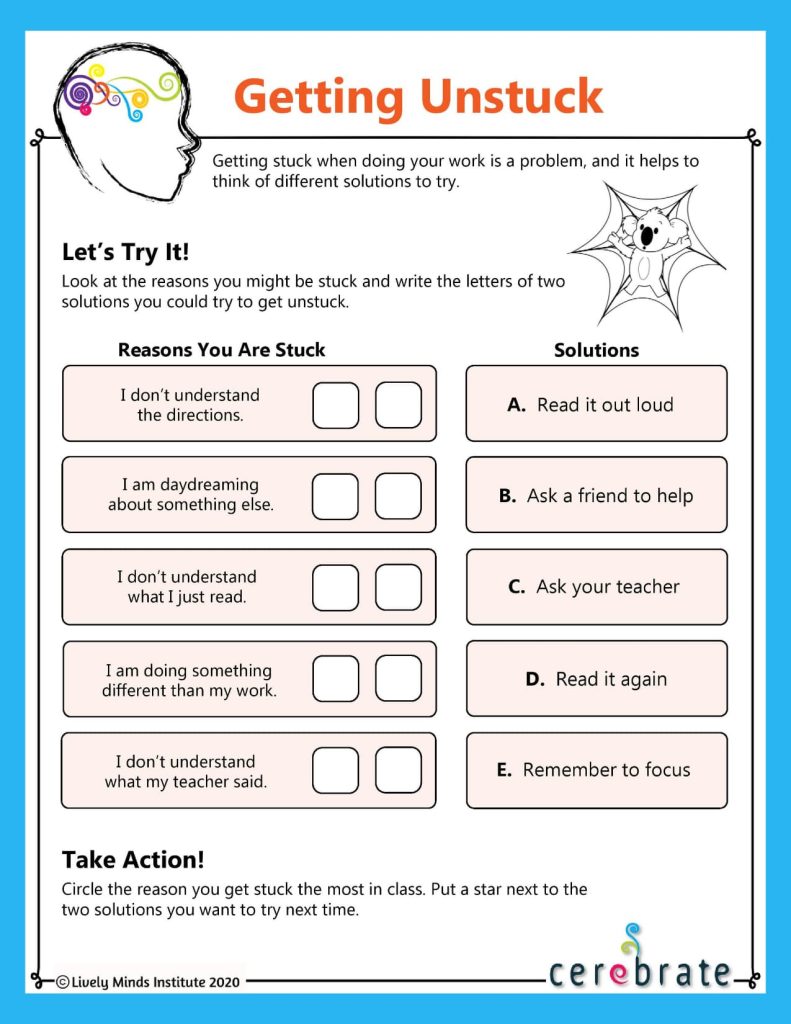
Executive function instruction also supports emotional regulation and flexibility. Students learn to manage frustration, worry, and overwhelm, adjust to changes in plans, transition smoothly between activities, and consider multiple solutions to problems, helping them stay engaged and respond appropriately to challenges.
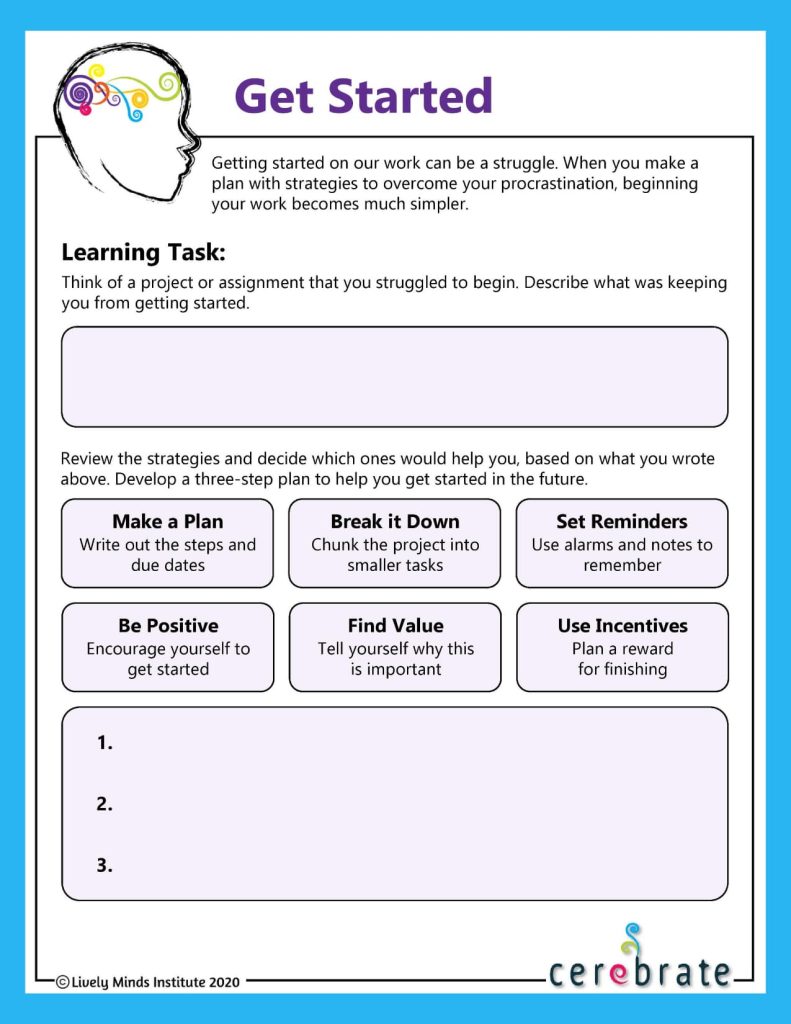
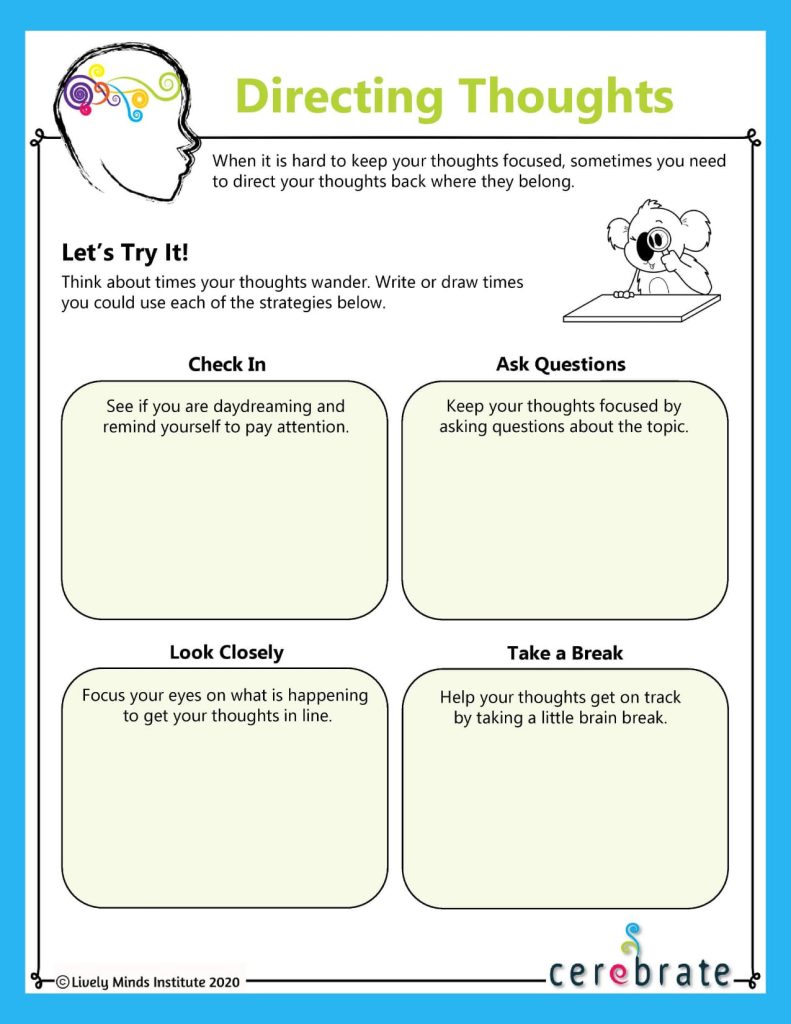
Over time, students strengthen task initiation, focus, time management, and organization. They learn to plan ahead, manage assignments and deadlines, stay on task, and follow through to completion. Together, these executive function skills build stronger learning habits, improve behavior, and support confidence across classrooms and beyond.

Executive Function Lessons Designed for Every Age
Students of all ages benefit from building executive function skills when instruction is aligned to their developmental stage. Cerebrate lessons are organized into three grade bands—grades 1–4, grades 5–8, and grades 9–12—to ensure language, examples, learning activities, and reflection questions are appropriate and meaningful for each age group.
This age-aligned approach helps educators deliver executive function instruction that resonates with students, supports engagement, and reinforces skill development. By meeting learners where they are developmentally, Cerebrate helps students apply executive function strategies in ways that feel relevant, practical, and effective across learning environments.
What is Executive Function Learning?
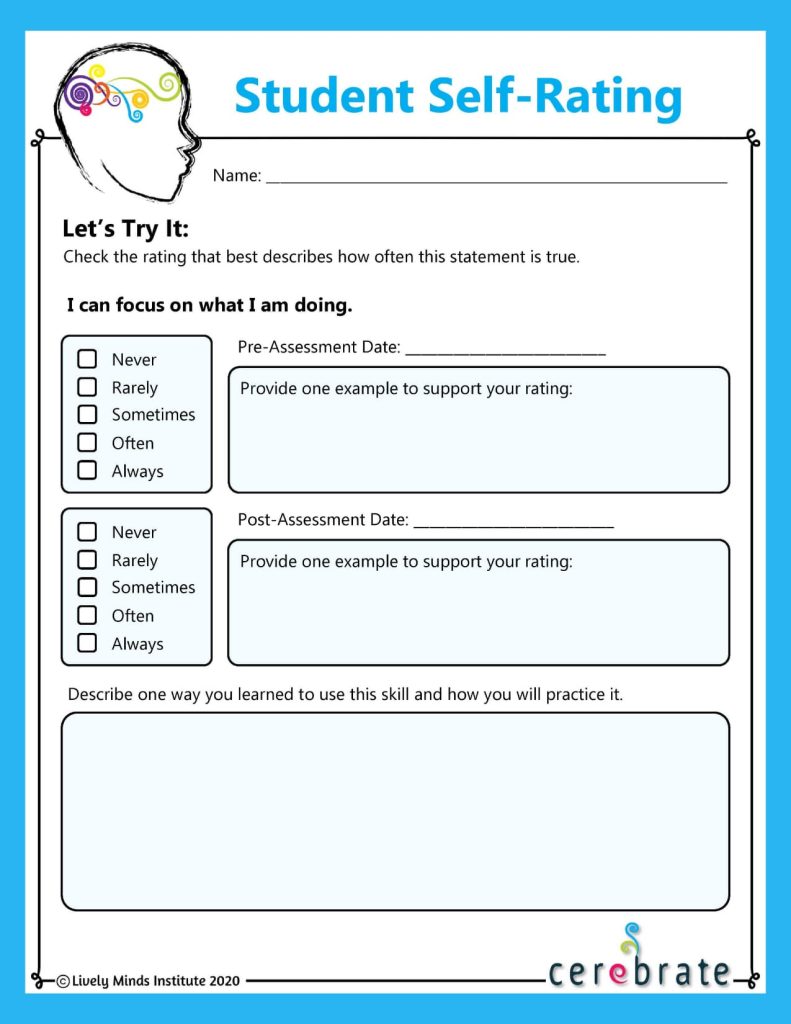
Seven key components of executive function instruction are incorporated into the Cerebrate curriculum, and they are based on the leading research in the field. As you look at the lessons, you will notice the following best practices:
1.
Assessment
Narrowing in on specific student struggles to know exactly what strategies should be used for improvement.
2.
Motivation
Helping students recognize their individual accomplishments and growth to give them an intrinsic desire to improve.
3.
Collaboration
Partnering with students to build strong habits by listening actively, asking questions, and thinking critically.
4.
Engagement
Providing a variety of activities and questions for students to express themselves, maintain focus, and invest in their learning experiences.
5.
Instruction
Teaching with a direct approach and repetitive practices to provide students opportunities to self-reflect and monitor their own progress.
6.
Application
Giving students the ability to associate specific skills to their own circumstances by practicing skills in real-life situations.
7.
Metacognition
Building awareness through self-reflection for students to respond to challenges in ways they are invested and interested in.