Student Highlight.
Mason's Challenges
Self-Monitor Solutions
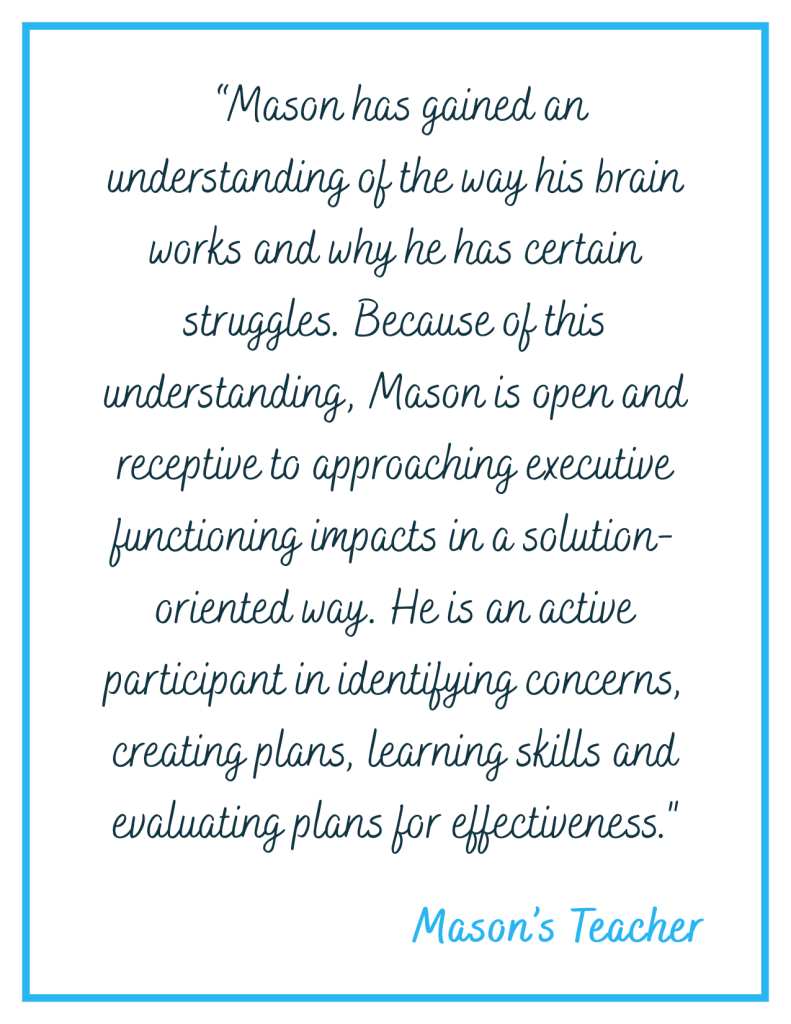
Mason had difficulty monitoring his work and understanding where he needs to improve. He shared that because he has a hard time asking for help, he doesn’t always know what he needs to do better.
The Cerebrate lessons Quality Control and Quality of Work helped Mason learn to determine which work was getting full credit and which work was losing points. He looked to find patterns and identify the reasons he was turning in work that was below average. He decided to use his strengths to keep motivated, and he created a quality control checklist for reviewing his completed work. Mason discovered that the list kept him accountable and consistent. He liked the independence that came from checking his own work. Initially, Mason struggled to see where he needed to improve. By learning to look closely at the quality of his work, he is now able to understand what causes him to lose points and how to ensure he turns in his best work. Using these simple strategies is helping him complete his work with less guidance.
Working Memory Solution
Mason found it challenging to manage distractions around him. He expressed that he often cannot stay focused on a task to finish it on time, and his work is often late.
The Cerebrate lesson My Distractions helped Mason identify his biggest distractions. He created a list of distractions at school and at home and then created a top 5 list. He looked at how each of the top distractions kept him from completing his work, and he brainstormed possible solutions. The lesson Distraction Solution gave Mason strategies to manage his distractions and helped him put together a plan when he recognized his distractions were getting him off track. Mason shared how frustrating it is for him to turn in late work, and he used that as a motivation to try his new distraction solutions.
At the beginning, Mason had a hard time staying focused on his work and keeping on task long enough to finish his assignments. After completing the lessons, he is aware of the distractions that affect his ability to focus, and he uses the solutions he developed to manage the distractions and pay attention to what he needs to finish.
Planning Solution
Mason struggled to plan and start his tasks with enough time to finish. He expressed how he gets overwhelmed and upset when he doesn’t have enough time to complete assignments.
The Cerebrate lesson Estimating Time helped Mason compare the time he thought he needed to complete his work with the time he actually needed. He used the lesson Assignment Tracker to help manage his workload and keep track of due dates of what needed to be completed, so he could start his work with enough time to finish. The lesson Task Chunking gave Mason the strategy of breaking down his larger assignments into more manageable pieces to reduce the feelings of overwhelm.
When Mason began, he struggled to plan his assignments and due dates which caused him to rush to complete work on time. By learning to estimate time more accurately, track assignments, and chunk larger tasks, Mason can manage multiple assignments and get them completed on time. He feels more confident that he will be able to keep up with his work and continue to find ways to improve his planning skills.